The Ramadan Period Guide: Maintaining Spirituality and Fiqh Rulings When You Can't Fast
Feeling 'Ramadan FOMO' because of your period? Discover how to maintain your spiritual connection, master the fiqh of menstruation, and earn rewards even when you can't fast.
The Ramadan Period Guide: Maintaining Spirituality and Fiqh Rulings When You Can't Fast

However, it is essential to reframe this perspective. In Islam, menstruation is not a 'spiritual break' or a punishment; it is a natural, divine decree from Allah (SWT). When you refrain from fasting and prayer during your period, you are not 'missing out'—you are actually engaging in a profound act of worship through obedience.
This comprehensive Ramadan period guide is designed to help you navigate the fiqh of menstruation, manage your spiritual well-being, and ensure that your 'off days' are just as rewarding as your fasting days.
Table of Contents 1. Redefining Worship: Why Your Period is Not a 'Break' from Allah 2. The Fiqh Essentials: What is Permissible and Prohibited 3. Understanding the 'Sacredness of the Month' (Madhab Differences) 4. The 'Dhikr Week' Strategy: 5 Ways to Stay Spiritually Active 5. Maximizing the Last 10 Nights and Laylatul Qadr 6. Practical Wellness: Managing PMS in a Fasting Household 7. Post-Ramadan Planning: How to Successfully Make Up Your Fasts 8. FAQ: Common Questions on Purity and Practice

Redefining Worship: Why Your Period is Not a 'Break' from Allah
The most important step in managing menstruation in Ramadan is changing your mindset. We often equate worship (Ibadah) solely with physical acts like Salah and fasting. However, the essence of Ibadah is submission to the will of Allah.
When Allah commands you to fast, fasting is your worship. When Allah commands you—through the biological process He created—to refrain from fasting and prayer, then refraining becomes your worship. You are obeying the Lawgiver just as much when you eat during the day as when you abstain from food at dawn.
The Power of Niyyah (Intention) The Prophet (peace be upon him) said: "Actions are but by intentions." If your habit is to fast and pray, and you are only stopped by a natural excuse, Allah (SWT) in His infinite mercy records the reward for you as if you were still performing those acts. Your heart’s desire to be standing in prayer is seen and rewarded by the Almighty.
According to Muslima Coaching, shifting from 'doing' to 'being in obedience' is the key to overcoming spiritual disconnection in Ramadan.
The Fiqh Essentials: What is Permissible and Prohibited
Understanding the period during Ramadan rules is vital for peace of mind. While certain physical rituals are restricted, the doors to Allah’s mercy remain wide open.
What is Prohibited: Fasting: It is haram (forbidden) to fast while menstruating. If you fast, it is not valid. Ritual Prayer (Salah): You are exempt from the five daily prayers and Taraweeh. Touching the Mushaf: Most scholars agree you should not touch the physical Arabic Quran without a barrier. Tawaf: If you are performing Umrah, you cannot perform the circumambulation of the Kaaba until your period ends and you perform Ghusl.
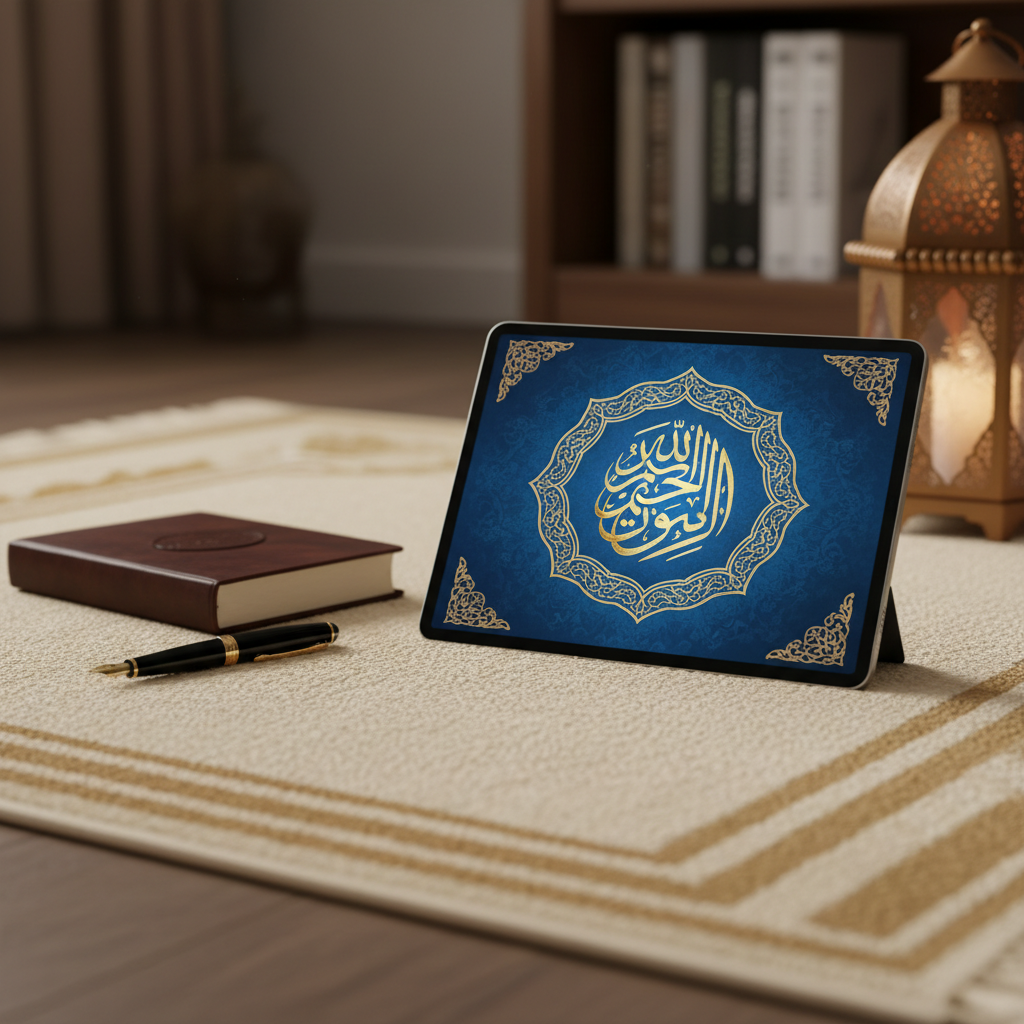
What is Permissible (and Recommended!): Dhikr (Remembrance): SubhanAllah, Alhamdulillah, Allahu Akbar, and La ilaha illa Allah can be recited at any time. Dua (Supplication): You can talk to Allah, ask for your needs, and make long, heartfelt Duas. Listening to the Quran: You can listen to recitations via apps or recordings. Reciting from Memory: Many scholars permit reciting the Quran from memory or using a digital device (like the Muslimah Pro app) because a phone is not considered a 'Mushaf.' Reading Translation/Tafsir: You can study the meaning of the Quran and read books of Islamic knowledge. Serving Others: Preparing Iftar for those who are fasting is a high-reward act.
Understanding the 'Sacredness of the Month' (Madhab Differences)
There are slight variations in how different schools of thought (Madhabs) approach the behavior of a woman whose period ends or begins during the day in Ramadan.
- • The Hanafi Position: If a woman’s period ends during the day, or if it begins during the day, the Hanafi school suggests she should 'act like a fasting person' (Imsak) for the remainder of that day out of respect for the sanctity of Ramadan. This means refraining from eating or drinking in public. However, she still must make up that day later.
- • The Shafi’i and Maliki Position: These schools generally hold that since the person is not legally required to fast, they do not need to mimic the fast, though they should still be discreet about eating out of respect for those fasting around them.
According to Islamic Relief UK, the consensus remains that regardless of when the period starts or ends, that specific day must be made up after Ramadan.
The 'Dhikr Week' Strategy: 5 Ways to Stay Spiritually Active
Don't let your routine slip just because you aren't praying Salah. Use these five strategies to maintain your 'spiritual high.'
1. The 'Salah-Time' Dhikr When the Adhan goes off, don't just keep scrolling on your phone. Set aside 10–15 minutes (the time you would usually spend on Salah) to sit on your prayer mat. Use this time for dhikr for periods, such as reciting SubhanAllahi wa bihamdihi 100 times. This keeps the habit of routine worship alive.
2. Feeding the Fasting People The Prophet (peace be upon him) said: "Whoever feeds a fasting person will have a reward like that of the fasting person, without any reduction in his reward." (Tirmidhi). By taking over the kitchen duties or ordering Iftar for the local mosque, you are effectively 'fasting' through the person you fed.
3. Deep Quran Engagement Since you may have more time while others are at Taraweeh, dive deep into a single Surah. Read the Tafsir (exegesis), watch a lecture series on its meaning, and reflect on how to apply it to your life. This is often more spiritually transformative than a quick recitation.
4. The 'Istighfar' Challenge Ramadan is the month of seeking forgiveness. Use your period days to focus heavily on Istighfar (seeking Allah's forgiveness). Aim for 1,000 repetitions of Astaghfirullah daily. It purifies the heart and prepares you for a stronger return to Salah.
5. Community Service and Khidma Service (Khidma) is a high form of worship. Help an elderly neighbor, volunteer for a charity drive, or simply be a source of ease for your family. These are all acts of worship while menstruating.
Maximizing the Last 10 Nights and Laylatul Qadr
It can be heartbreaking to realize your period coincides with the last ten nights of Ramadan. However, Laylatul Qadr on period is not a lost cause. The reward of this night is for everyone who seeks it with sincerity.
- • The Best Dua: Recite the Dua the Prophet (pbuh) taught Aisha (RA): "Allahumma innaka 'afuwwun tuhibbul 'afwa fa'fu 'anni" (O Allah, You are Forgiving and love to forgive, so forgive me).
- • Charity: Give even a small amount of Sadaqah every night of the last ten nights. If it falls on Laylatul Qadr, it is as if you gave charity for 83 years.
- • Listening to Recitation: Put on a beautiful recitation of the Quran and let the words wash over you. The reward for listening is immense.
Amaliah notes that the 'vibe' of the last ten nights can still be felt through communal Iftars and late-night Duas, even if you aren't in the prayer line.
Practical Wellness: Managing PMS and Nutrition in a Fasting Household
When you are on your period, your body has different nutritional needs than those who are fasting.
- • Hydration is Key: Since you aren't restricted to eating at night, ensure you are drinking water consistently throughout the day to combat fatigue.
- • Iron-Rich Foods: Combat the blood loss and lethargy by eating spinach, lentils, or lean meats.
- • Manage the 'Period Brain': PMS can cause irritability or sadness, which might make you feel more guilty about not fasting. Be gentle with yourself. Recognize that your hormones are part of Allah’s design.
- • Discreet Eating: While you have the right to eat, doing so discreetly in a household where everyone else is fasting is a sign of Adab (etiquette) and respect for the month.
Post-Ramadan Planning: How to Successfully Make Up Your Fasts
Once Ramadan ends, the obligation to make up the missed fasts begins.
- 1 Track Immediately: Use the Muslimah Pro app to log exactly how many days you missed. Don't rely on memory!
- 2 The 'Winter Fast' Strategy: If you find fasting difficult, try to make up your days in the winter months when the days are shorter.
- 3 Mondays and Thursdays: Combine the intention of making up an obligatory fast with the Sunnah of fasting on Mondays and Thursdays.
- 4 Don't Delay: Aim to finish your make-up fasts before the next Ramadan. Many women find it helpful to do them immediately after Eid (but not on the day of Eid itself, as fasting is forbidden then).
FAQ: Common Questions on Purity and Practice
Can I touch the Quran or recite it while on my period? As mentioned, most scholars advise against touching the physical Arabic text (Mushaf) without a barrier. However, reading from a phone, tablet, or a translation with the Arabic text (where the translation exceeds the Arabic) is generally permitted. Reciting from memory is also permitted by many scholars, especially for students of knowledge. Egypt's Dar Al-Ifta provides detailed rulings on this.
What should I do if my period starts just before Iftar? If your period starts even five minutes before the Maghrib Adhan, that day's fast is invalidated. You must make it up later. While it can feel frustrating, remember that you will be rewarded for the hours you did fast with the intention of completing the day.
Is it permissible to take medication to delay my period for Ramadan? Most contemporary scholars say it is permissible to use period-regulating pills to delay menstruation so a woman can fast the whole month, provided it does not harm her health. However, many scholars also suggest that it is better to accept the natural flow Allah has decreed. Always consult with a doctor before taking such medication.
How can I catch the rewards of Laylatul Qadr if I cannot pray? Focus on Dhikr, long Duas, and giving charity. The reward of the night is for the state of the heart and the sincerity of the seeker, not just the physical prostration.
Am I allowed to enter the mosque for lectures or community Iftars? There is a difference of opinion. Some schools (Hanafi/Shafi'i) generally say a menstruating woman should not enter the prayer hall of the mosque. However, many modern scholars allow entering the mosque for educational purposes, lectures, or Iftar in the social hall/basement areas, especially if there is a need. Check with your local Imam for the specific rules of your community center.
Do I need to make up the prayers I missed during my period? No. Allah (SWT) has exempted women from making up the prayers missed during menstruation as a mercy, because prayers occur five times a day and would be a significant burden. Fasts, however, must be made up as they occur only once a year.
What is the ruling on Ghusl after my period ends? If your period ends before Fajr, you must intend to fast. Your fast is valid even if you do not perform the physical Ghusl (ritual bath) until after the time of Fajr has started. However, you must perform Ghusl as soon as possible to perform your morning prayers.
Conclusion: Your Journey is Valid
Ramadan is a journey of the soul. Whether you are standing in the front row of Taraweeh or sitting on your sofa making Dhikr while your family prays, your connection to Allah is based on your sincerity and your submission to His will.
Use this Ramadan period guide to stay focused, keep your heart soft, and remember that Allah is Al-Wahhab (The Giver of All)—He can grant you the full rewards of the month regardless of your physical state.
Download the Muslimah Pro app today to track your cycle, log your missed fasts, and access daily Dhikr and Quran translations to keep your spiritual momentum going all month long.