Maximizing Ibadah During Menstruation: A Ramadan Guide for 2026
Don't let your cycle pause your spirituality. Discover our comprehensive guide to worship during Haid, including digital Quran rulings, an Ibadah menu for Laylatul Qadr, and how to overcome spiritual FOMO in Ramadan 2026.
Maximizing Ibadah During Menstruation: A Ramadan Guide for 2026

It is a scenario many of us dread: You have prepared your heart for Ramadan, decorated your home, and set ambitious goals to complete the Quran. Then, a few days into the holy month—or worse, right as the last ten nights begin—you check your Muslimah Pro app and see the prediction. Your period is due.
For many women, the arrival of Haid (menstruation) during Ramadan brings a wave of sadness, guilt, and a profound feeling of disconnection. We often equate worship exclusively with the physical acts of Salah (prayer) and Sawm (fasting). When those are removed, we feel we have been "benched" from the spiritual game.
However, for Ramadan 2026 (projected to fall between mid-February and mid-March), we want to invite you to shift your perspective. In Islam, spirituality is not a rigid box; it is a fluid state of submission to Allah. Your period is not a punishment; it is a biological reality designed by the same Creator who designed Ramadan.
This comprehensive guide is dedicated to helping you maximize your Ibadah during menstruation in Ramadan, ensuring that you don't just "get through" these days, but actually thrive in them.
---
Table of Contents
- 1Introduction: Reframing Your Mindset on Menstruation
- 2Why Refraining from Fasting and Salah is an Act of Obedience
- 3Overcoming the 'Spiritual FOMO' of Ramadan 2026
- 4The Fiqh of Menstruation in Ramadan: What is Allowed?
- 5The Digital Quran vs. Physical Mushaf Debate
- 6Entering the Masjid and Listening to Taraweeh
- 7Your Daily Ibadah Menu (When You Can't Fast)
- 8Dhikr and Tasbih: The Heavyweights of the Scale
- 9Dua and Istighfar: The Weapon of the Believer
- 10Khidmah: Earning the Reward of Fasting by Feeding Others
- 11Catching Laylatul Qadr While on Your Period
- 12A Step-by-Step Night Routine for the Last Ten Nights
- 13Spiritual Wellness: Hygiene and Mental Health
- 14Frequently Asked Questions (FAQ)
---
Introduction: Reframing Your Mindset on Menstruation
The first step to a successful Ramadan period guide 2026 is not an action, but a thought process. We must dismantle the cultural stigma that suggests a menstruating woman is "spiritually dirty" or "distant from Allah."
Allah (SWT) is Al-Khaliq (The Creator). He created the cycle of the moon that determines Ramadan, and He created the cycle of your womb. These two cycles are not in conflict; they are both under His command. When they overlap, it is not an accident—it is a specific test of submission tailored just for you.
Why Refraining from Fasting and Salah is an Act of Obedience
The most profound realization a Muslim woman can have regarding her cycle is this: Abstaining from prayer and fasting when you are menstruating is, in itself, an act of worship.
Why? Because worship (Ibadah) is defined as obeying the commands of Allah.
- • When Allah commands us to pray, we worship Him by praying.
- • When Allah commands us not to pray (during menstruation), we worship Him by not praying.
If you were to fast or pray while on your period, you would actually be sinning because you would be disobeying a direct command. Therefore, by not fasting, you are submitting your will to Allah’s will. You are saying, "O Allah, I would love to stand before You in prayer, but because You have asked me to step back, I step back out of love and obedience to You."
This reframing transforms your rest, your eating, and your abstinence into rewardable actions. As noted by scholars at Yaqeen Institute, understanding that menstruation is not a spiritual failing but a divine decree is the first step to finding peace during your cycle.
Overcoming the 'Spiritual FOMO' of Ramadan 2026
"Spiritual FOMO" (Fear Of Missing Out) is real. When the house is buzzing with Suhoor preparation, or the family leaves for Taraweeh, the isolation can be heavy.
In 2026, Ramadan falls in late winter/early spring. For those in the Northern Hemisphere, the days are shorter and cooler. This makes fasting physically easier for the general public compared to the long summer Ramadans of the past decade. Paradoxically, this can increase the feeling of isolation for those not fasting. You might feel like everyone is gathering rewards with relative ease while you are stagnant.
Remember that Allah’s treasury is infinite. He does not run out of rewards. The woman who feeds her fasting family, keeps her tongue moist with Dhikr, and cares for her children or parents while menstruating can attain a status just as high—or higher—than someone fasting who spends their day backbiting or sleeping.
---
The Fiqh of Menstruation in Ramadan: What is Allowed?
To navigate Ramadan confidently, we must distinguish between cultural myths and Islamic jurisprudence (Fiqh). Many women limit themselves unnecessarily because they don't know the nuances of the rulings.
The Digital Quran vs. Physical Mushaf Debate
This is the most common question we receive at Muslimah Pro: "Can I read Quran on period?"
The majority of scholars (the Jumhur) hold the view that a menstruating woman should not touch the physical Mushaf (the Arabic script in a bound book) directly without ritual purity (Tahara). However, we live in a digital age that offers a beautiful mercy.
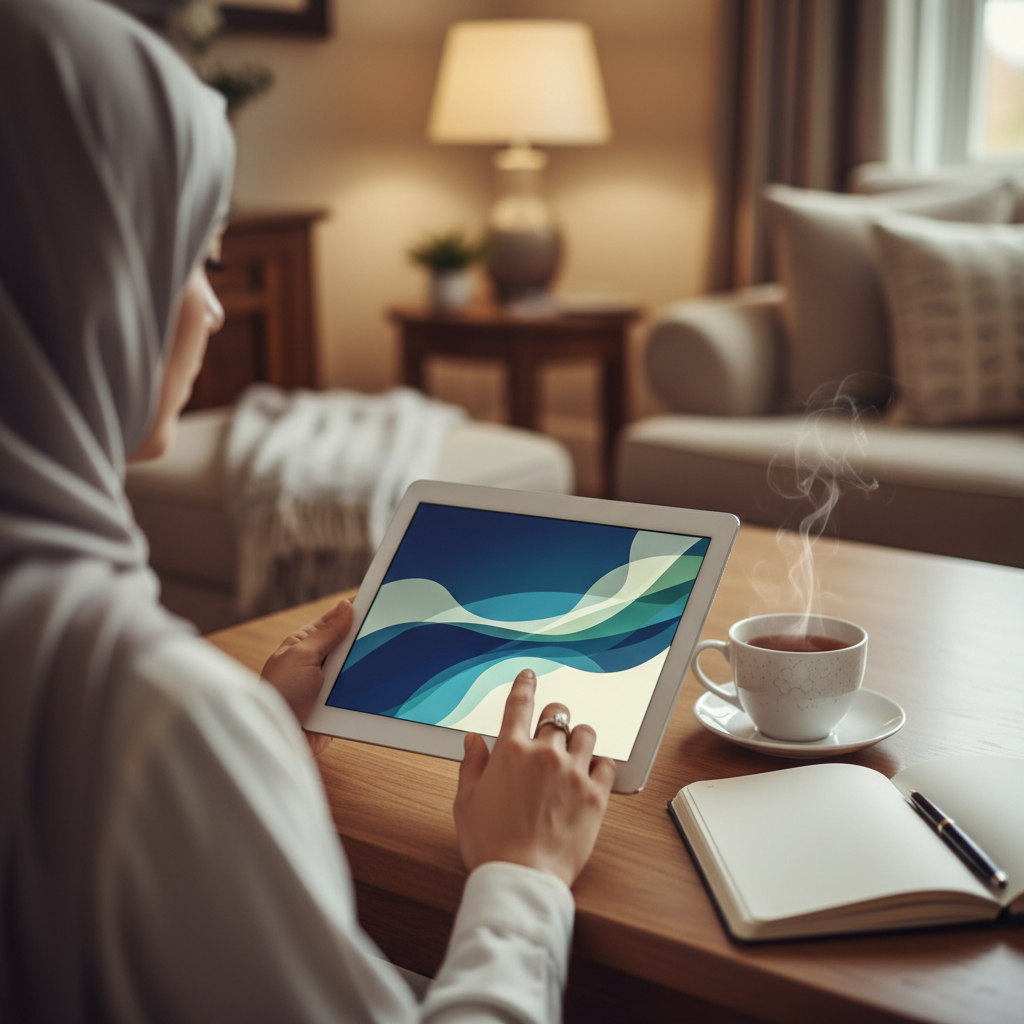
The Digital Loophole: Scholars and Fiqh councils widely agree that a mobile phone, tablet, or computer is not a Mushaf. It is a device that stores data. Therefore, you can hold your phone and read the Quran from an app like Muslimah Pro without being in a state of ritual purity.
Furthermore, reading from a book of Tafseer (exegesis) or a translation where the Arabic text is less than 50% of the content is also permissible to touch according to many schools of thought.
Key Takeaway: You do not need to stop your relationship with the Quran. Switch to the digital version or a translation. For a deep dive into these rulings, IslamQA provides detailed insights on digital Quran usage.
Entering the Masjid and Listening to Taraweeh
Can you go to the mosque? This is often a source of confusion.
- • The Strict View: The majority of scholars (Hanafi, Shafi'i, Maliki) hold that it is not permissible for a menstruating woman to stay in the designated prayer hall (Musalla).
- • The Permissive View: The Hanbali school and scholars like Ibn Taymiyyah allow it if there is a need (like attending a class or listening to the recitation) and if hygiene is maintained.
- • The Middle Path: Most modern Islamic centers have a multi-purpose hall, a basement, or a community room that is technically not part of the Musalla. You can sit there, listen to the Taraweeh recitation, make Dhikr, and soak in the community atmosphere without violating the sanctity of the prayer space.
Always check with your local Masjid about which areas are designated as "prayer space" versus "community space."
---
Your Daily Ibadah Menu (When You Can't Fast)
If you take one thing from this Ramadan period guide 2026, let it be this: Do not leave the schedule of Ramadan just because you left the ritual of fasting.
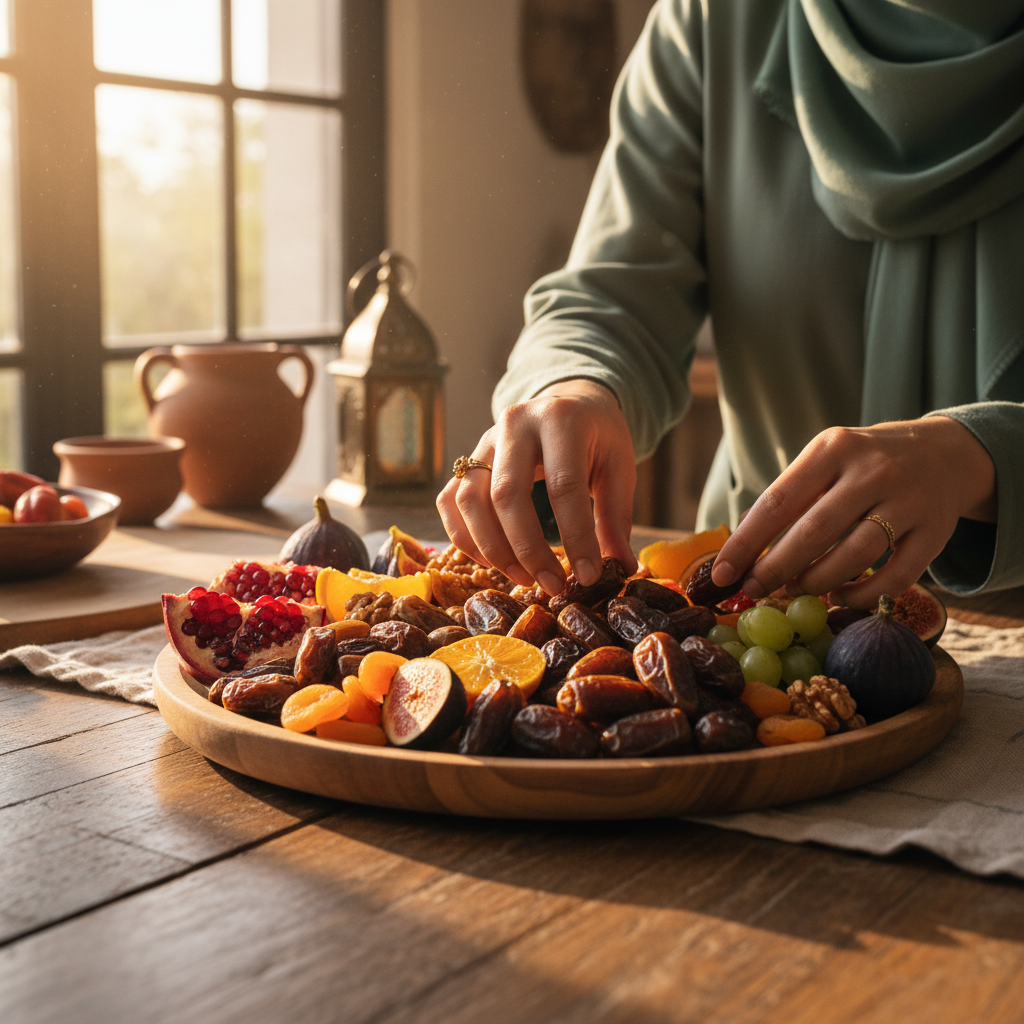
Maintain your routine. Wake up for Suhoor (even just for water and Dua), and sit with the family at Iftar. Here is a menu of worship to replace Salah and Sawm.
Dhikr and Tasbih: The Heavyweights of the Scale
Dhikr (remembrance) requires no Wudu, no Hijab, and no specific time. It is the most accessible form of worship for a menstruating woman.
The Prophet (PBUH) said: "Two words are light on the tongue, weigh heavily in the balance, and are loved by the Most Merciful: SubhanAllah wa bihamdihi, SubhanAllah al-Azeem." (Bukhari)
Suggested Routine: Morning/Evening Adhkar: Use the Muslimah Pro app to track the morning and evening protections. Istighfar: Recite Astaghfirullah 100 times while cooking or commuting. Salawat: Send blessings upon the Prophet (PBUH) on Fridays. The Third Kalima: SubhanAllah, Walhamdulillah, Wa La ilaha illallah, Wallahu Akbar.
Dua and Istighfar: The Weapon of the Believer
Did you know that the time of Iftar is one of the most powerful times for Dua, regardless of whether you physically fasted? The gathering of Muslims breaking their fast attracts the mercy of Allah. Join them.
Raise your hands. Ask for the impossible. Allah listens to the heart, not just the empty stomach. This is the best time for Dua for women on period because the veil between the servant and the Lord is thin at sunset.
Khidmah: Earning the Reward of Fasting by Feeding Others
This is the ultimate "hack" for menstruating women. The Prophet (PBUH) said: > "Whoever gives food for a fasting person to break his fast, he will have a reward like theirs, without that detracting from their reward in the slightest." (Tirmidhi)
By preparing Suhoor or Iftar for your family, roommates, or community, you effectively "copy-paste" their fasting reward into your book of deeds. If you are too tired to cook, donating money to feed the fasting yields the same result.
For more on the community aspects of Ramadan and managing social feelings, Amaliah offers excellent cultural guides for women.
Seeking Knowledge (Talab al-Ilm)
Listening to Islamic lectures, podcasts, or Seerah series is a high form of worship. Angels surround the gatherings of knowledge. * Action Item: Create a playlist of Tafseer lectures. While you cannot recite the Quran in Salah, you can understand its deeper meanings through listening.
---
Catching Laylatul Qadr While on Your Period
The last ten nights are the crown jewel of Ramadan. If your period coincides with these nights, do not despair. Laylatul Qadr (The Night of Decree) is about Qiyam (standing in devotion), not just Salah.
A woman on her period can fully attain the reward of Laylatul Qadr—which is better than 1000 months of worship—through other acts of devotion.
A Step-by-Step Night Routine for the Last Ten Nights
Here is a practical schedule to ensure you are "standing" in worship, even if you cannot pray Salah.
- 1 9:00 PM - Intention & Preparation:
- 1 9:30 PM - The Digital Quran:
- 1 10:30 PM - The Golden Dua:
- 1 11:00 PM - Sadaqah (Charity):
- 1 11:30 PM - Heartfelt Dua:
- 1 Suhoor Time:
For further reading on the legal nuances of these nights, SeekersGuidance provides comprehensive Fiqh resources.
---
Spiritual Wellness: Hygiene and Mental Health
Your period is a physical tax on your body. In Ramadan, this can be compounded by changes in sleep and diet.
- • Hydration: Since you are not fasting, ensure you are drinking plenty of water during the day. This will help with cramps and fatigue, allowing you to have energy for night worship.
- • Iron Levels: Eat iron-rich foods. If you are anemic, the fatigue can make you feel spiritually lazy. Treat your body well so your soul can soar.
- • Ghusl and Hygiene: While Ghusl (ritual bath) is not required until the bleeding stops, maintaining high hygiene and making Wudu before sleep or Dhikr helps you feel "Ramadan Ready."
---
Frequently Asked Questions (FAQ)
Q: Can I touch the Quran on my phone while on my period? A: Yes. The majority of contemporary scholars agree that a mobile phone is not a Mushaf. You can touch the screen and scroll through the Quran app without Wudu.
Q: Do I need to wake up for Suhoor if I am not fasting? A: It is not mandatory, but it is highly recommended. There is Barakah (blessing) in the Suhoor meal, and it is a prime time for Dua. It also keeps you in the rhythm of Ramadan and prevents you from feeling isolated from the family schedule.
Q: Is it disrespectful to eat silently during the day in Ramadan? A: It is not sinful to eat, as you are obeying Allah by not fasting. However, out of respect for the sanctity of the month and consideration for those fasting around you, it is polite to eat discreetly and not openly in public.
Q: Can I visit the cemetery or make Dua for the deceased while menstruating? A: Yes, you can visit the cemetery and make Dua. Some scholars advise against entering the graveyard frequently, but the act of making Dua for the deceased is permitted regardless of menstruation.
Q: What should I do if my period starts five minutes before Maghrib? A: If your period starts even a moment before the Maghrib Adhan (sunset), that day's fast is invalidated and must be made up later. Do not despair; you are rewarded for the effort of the day and for submitting to the decree that ended it.
Q: Can I recite Quran from memory without touching the book? A: There is a difference of opinion. The Maliki school allows women to recite from memory (or for teaching/learning purposes) to prevent them from forgetting the Quran. This is a valid view to follow if you wish to keep your recitation flowing.
Q: Does listening to the Quran yield the same reward as reading it? A: Allah's bounty is vast. While reading has a specific reward for every letter, listening with attentiveness (Istima') is a distinct act of worship that brings mercy. Allah says in the Quran: "So when the Qur'an is recited, then listen to it and pay attention that you may receive mercy." (7:204).
---
Conclusion
Sister, as we approach Ramadan 2026, release the guilt. Your cycle is not an interruption to your worship; it is a shift in your station. You are moving from the station of Salah to the station of Dhikr, Sabr (patience), and Reda (contentment with Allah’s decree).
Use Muslimah Pro to track your cycle so you can predict when these days will fall, and plan your "Ibadah Menu" accordingly. May Allah accept your rest as worship, your eating as obedience, and your Dua as if you were standing in the first row.
Ramadan Mubarak from the Muslimah Pro Team.
--- References: 1. Yaqeen Institute: Worship During Menstruation 2. SeekersGuidance: Menstruation & Ramadan Fiqh 3. IslamQA: Rulings on Digital Quran 4. Amaliah: The Ramadan Guide for Women 5. MuslimMatters: Spiritual Productivity for Menstruating Women